A Literary, Self-referential, Post-modernist Pub Crawl

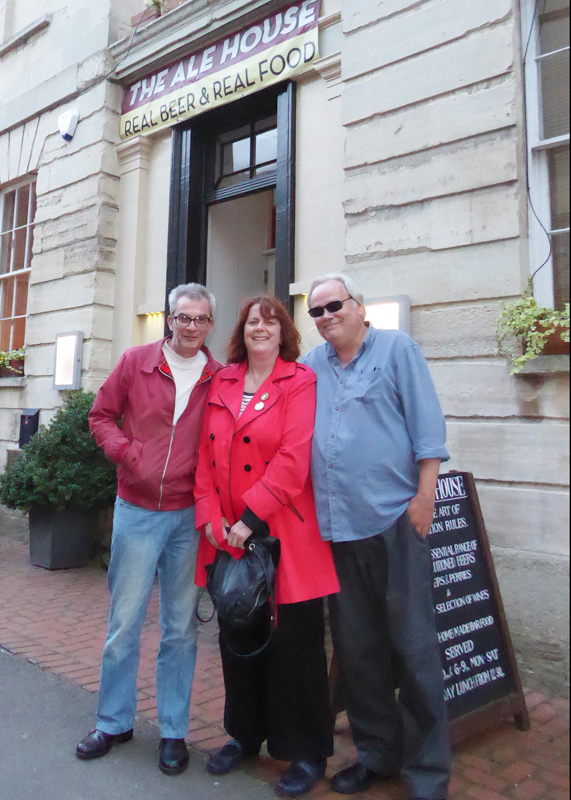
Announcing a Literary, Self-Referential, Post-Modernist Pub Crawl on Thursday – starting at The Fountain at 4.

The Fountain – The Vic – The Greyhound – The Imperial – The Lord John – The Little George.

Announcing a Literary, Self-Referential, Post-Modernist Pub Crawl on Thursday – starting at The Fountain at 4.

The Fountain – The Vic – The Greyhound – The Imperial – The Lord John – The Little George.

Why Is There an L in Samon?

Dear Stuart,

MY EARLY YEARS

I was born in Liverpool in 1952. It seems strange looking back but Liverpool was still a bombsite as it was only 7 years after the end of the war. We lived 300 yards from the docks and through a child’s eyes everything seemed to be in black and white. I was the second oldest of 5 children. My mother had her children before she was 21 and we lived in 2 rooms in a privately rented house.
My father was pretty useless and he preferred the company of his mates in the pub and I remember him spending time in prison but my mother told us that he was working in Butlins holiday camp during the periods of his absence.

Dear Stuart,

MY EARLY YEARS

I was born in Liverpool in 1952. It seems strange looking back but Liverpool was still a bombsite as it was only 7 years after the end of the war. We lived 300 yards from the docks and through a child’s eyes everything seemed to be in black and white. I was the second oldest of 5 children. My mother had her children before she was 21 and we lived in 2 rooms in a privately rented house.
My father was pretty useless and he preferred the company of his mates in the pub and I remember him spending time in prison but my mother told us that he was working in Butlins holiday camp during the periods of his absence.
He was a man that presented as being a good man to the outside world and he would buy anybody a pint and spend hours gambling and living the life of a single man. He had no interest in his children and he chose to spend everything he earned as a plumber on anybody except his family. He had a nickname for all of his children and mine was Gobshite.
Life was pretty tough with no luxuries but it was preferable to when my father was home because of the violence and toxic atmosphere that was around due to his drunken behaviour. On one occasion my father smashed every window in the house during one of his violent episodes and on another occasion he threw an iron fireguard at my mother necessitating her to have stitches in her eye. We were well known to the NSPPC and we were dependent on the Catholic Church for food and clothes.
When I was only 5 years old I had already been identified as a child with problems and I know I started in the infant class late because I was still wetting myself.
An early recollection of school was at the age of 8 or 9 being teased because I was so scruffy and probably smelly due to having no bathroom or parental guidance when it came to personal hygiene.
When I was about 10 there was a school medical for children of that age. I remember sitting in the class being very frightened because I knew that I would have to strip down to my underwear – which I did not have. I told the teacher that I was unwell hoping that she would leave me alone and not send me into the gymnasium with the other children. Eventually my name was called and I started sobbing but the teacher told me I was acting like a cry-baby, and that I had to go. I can’t say exactly what happened next but I know the police took me home because I ran away from the school rather than go into the medical.
When I was 10 I could not read but I knew all the countries in the world that played football by recognising the badges and colour of the shirts the players wore.
On one occasion at school the teacher set up a quiz based on capital cities. The teacher would name a country and ask what the capital was.
I could not write anything down so shouted out the answers. After about 6 or 7 that I got right she called me up to the front of the class and said that I had to shut up and that she did not know how I was doing it but in her opinion I was cheating.
I tried to tell her that I knew the answers because I knew that all the country’s football teams played in the capital city. My older brother by 2 years was a big football fan and he collected football stickers, which is how I knew so much about world football. I remember being incredibly embarrassed and upset that my little bit of glory was being taken away from me and I did not have the emotional maturity to cope.
Looking back as I have done over the years I think that experience led me to becoming disruptive and developing a sarcastic attitude to the teachers and I spent most of my time in class sitting at the back making a nuisance of myself.
When I was 11 I had to sit the 11 plus which was an absolute farce. It was well known that I could not read but I was told to go into the exam room and just put my name on the paper and leave the room if I wanted to. I was reminded not to make any noise when I left because I mustn’t disturb the other children. After I had left the exam room I was told to go to the playing fields and play football until the exams were over.
It was around this time that a letter was sent to my mother that said that I was ESN and that when I went to secondary school I would be in a remedial class. I remember being shocked to the core when I was told that ESN was an abbreviation for Educationally Sub Normal. This really reinforced what I was beginning to suspect that I was different but did not know why.
At the age of 11 both my older brother and I had an early morning milk round from 5am until 7am after which we both went on to do a paper round until 8.30am. This coupled with the home environment was a perfect storm for producing an emotionally wrecked child whose concentration was practically zero and who lived in a world of fear and anxiety.
I can honestly say I can’t remember ever sitting with a teacher and going through ABC or the cat sat on the mat. I guess I must have but all I remember is living in fear that I would get something wrong again. I must have had school reports but I can’t remember ever seeing one or my parents going to parent’s evenings.
The only joy that I can remember as a child was playing football and when I was about 10 I first heard of Bill Shankly, which ignited my love of Liverpool Football Club that has stayed with me throughout my life. At the age of 65 I have seen Liverpool live over 1,000 times and have watched them play in 20 countries.
It was around this time that I started collecting football programmes and because of this I learned some words. I knew that my favourite player was Peter Thompson. For a long time I pronounced his name THompson as I did not know that the H was silent. I found it all so confusing and did not understand about how you put sounds together. I just could not understand the building blocks of how you read and I remember being full of anxiety whenever the class had to be tested on spellings.

SECONDARY SCHOOL EXPERIENCE
My experience of secondary school is difficult to put into words without getting angry and upset. I was an 11 year old whose life at home was pretty sad and I would have hoped that school might have been a respite from that. I can’t imagine what the report from my primary school would have said about me but the bottom line is that I went to secondary school unable to read or write other than to recognise the words Liverpool Football Club.
I was placed in a class call 1P which was supposed to identify you as a boy that would be going on after school days to work in an occupation using your hands i.e. PRACTICAL.
This was great in theory but the missing link was that to do any work in the woodwork department or metal workshop you needed to be able to do some basics maths and English. I was amongst a whole new group of peers who did not know me and teachers who did not have the will or experience to help a child that was so misplaced to be in this environment so once again I just became a nuisance and was seen as a risk to the other boys as I just messed about in these classes.
I did not have the life experience to ask for help, and life in the classroom was a torturous time. I was just crying out for somebody to help me and pick up on my strengths.
If I could get up and work for 3 hours before school and knew every player that had played for Liverpool since the forties why couldn’t somebody find time to treat me as an individual and help me. I wasn’t lazy and my love for Liverpool proved that I could be motivated.
The only time that I can remember getting attention was in an act of rebellion. I painted a red and white hat and scarf on the statue of a Saint that was in the school grounds. This incident was the talk of the school and I remember getting thrashed by the head teacher.
I did enjoy PE and was a pretty good footballer. The problem again was that I did not have football boots and the time spent in the changing rooms was very stressful, as I did not have the proper sports clothes.
I got on very well in history because I enjoyed hearing the stories but I dreaded having to write anything down on paper. I would cut out pictures and fill the exercise books with these but this was not acceptable to the teachers so as a result I just turned off and wasted everybody’s time.
Despite my failure to engage in the lessons I did go to school every day. I was not a child that did not go to school, which in some ways is more disappointing because I was there and could have been taught.
In short I don’t think I was any better equipped to face the adult world leaving secondary school than I had been 4 years before when leaving primary school.

MY EXPERIENCE OF READING AND WRITING AT SECONDARY SCHOOL
Whatever I wrote would have been illegible and I clearly remember being given back work that was a mass of red ink and whole sentences crossed out. This was very demoralising and embarrassing. In short, if I could get away with not writing then I was fine. I would engage in topics in lessons such as history and geography but once the pens came out I would retreat into myself.

MY WORK LIFE

At the age of 14 I left school 6 months early. I got a job as a cinema projectionist and life became a lot easier. The job was practical and there was very little need to be able to read or write.
On one occasion I nearly lost my job was when we were showing the children’s film Thunderbirds in the afternoon and the James Bond film Thunderball in the evening.
One Saturday evening halfway through the James Bond film I put on the wrong reel of film leaving the audience in shock because James Bond turned into Lady Penelope just as he was about to encounter with his latest conquest.
There were occasions that I put the wrong reels of film into the transit cases but by and large I got through life on my wits and I developed coping strategies to get by.
Going to work I would listen at the bus stop to people saying what bus was arriving or I would ask were the bus was going. I got to know the bus routes by the bus numbers without really understating how number sequences worked.
At the age of 15 I began listening to Bob Dylan and along with going to Anfield and standing in the boy’s pen life was good. Shankly was the father figure I had never had and the Kop became my family.
At 17 I got a job in Tescos working in the warehouse and again I made sure that any expectation that I would need to read was minimal. I became an expert in getting others to fill in my timesheet and I turned down better jobs because I knew I could not cope with anything written.
At 18 I moved to London and slept rough for a couple of years. I eventually got a job again as a cinema projectionist where once again I had strategies to enable me to manage without reading or writing anything down. On one occasion when I was sleeping rough the police arrested me as they thought I had stolen some food, which in fact had been given to me. I was asked by the custody sergeant to write down a statement of where I got the food and of course I could not. I remember getting angry with him and shouting because I did not want him to know that I could not read or write. I was threatened with another charge if I did not calm down.

THE TURNING POINT
I completed a 2-year community and youth work course at Goldsmiths College in which I had a dispensation to use a Dictaphone to record my lectures and also present my essays. I also had to hand write them but the grammar and the presentation looked like somebody had dropped a bottle of ink on the paper. The College knew that I could not read or write but they treated me with great respect and supported me throughout the 2 years.
Goldsmiths had great experience of working with mature students and they gave me a platform to air my views and express myself in a way that I had never had. I remember the thrill of being in a class and believing that I should be there and knowing that I wasn’t a Gobshite.
Fast forward 8 years and I am married to a wonderful woman who was a head teacher in a North London school. I was working in a children’s home as a residential social worker. I could still not read but apart from always having to make sure that I was on a shift with somebody that would do the case notes I was getting along as well as I could have expected.
Saying that there was always a tension just below the surface and simple things like signing a cheque, following a cookery recipe, reading to my daughter or writing a note to the milkman was impossible for me which was very stressful and embarrassing.
My wife was unwell and we both knew that her eyesight was deteriorating and that the day would soon come when she could no longer drive. It was this fact that galvanised me into making a decision to try and learn to read because I would need to be able to read road signs and be safe in the driver’s seat.
In about 1985 I attended adult literacy lessons at Catford Boys School. This was once a week for 2 hours but there was plenty of homework that had to be done.
The class was made up of about 10 older people 30+ and I did this for 2 years. A very strange sensation happened once when I wrote a very short piece of work. The teacher referred to me as having an unusual writing style. I was in shock to think that I even had a writing style.
One morning I arrived at work and sat in the overnight handover. The notes were read out recording what had happened the night before. I felt a surge of pride when I realised the notes were mine and that I had built up the courage to write them down; nobody laughed; nobody corrected the grammar or checked the spelling. The notes were nowhere perfect but they were mine.

As my reading began to get better I started reading my football programmes and after having some of them for years it was lovely to see them in a different light. I started buying a newspaper and I remember feeling grown up (I was about 32) because I could converse with my workmates on issues in the newspaper.
My reading now consists of football biographies as well as music biographies. I am reading a book at the moment of a young Muslim man who was radicalised and who has recorded how this happened and the message he sends is very powerful and stark.
At the age of 50 I went back to university to qualify as a social worker having spent 25 years working with people but not having a social work degree.
None of this would have been possible without Catford Boys adult literacy class and none of it would have been necessary if years before I had been valued and helped by the education system.
My message to young people would be seek out good people because they are there. Value yourselves and others. Try and see the best in others and be the best you can.
Life can be shit but it can also throw up opportunities but you have to be responsive and remember that no one is better than you but they might have made better use of their opportunities.
A good attitude can get you a long way, which is how I managed to make a living and make a life while not being able to read or write.
Pete

Hello Stuart,
Further to our meeting today here is the outstanding information we spoke about. In 2001 an educational psychologist regarding my struggle with English assessed me in Chelsea. The sessions were over 2 days and consisted of visual, auditory, and balance tests.
I was given a diagnosis of having dyslexia and was told that it was no surprise that I found it impossible to read at all well and could not cope with handwriting. My diagnosis came as a relief to me and explained to a certain degree why I had never been able to engage in mainstream education. With this information I was able to get help in my workplace to have a computer that met my needs and this made it possible for me to able carry out my duties.
After a couple of years I went on to qualify as a social worker and was able to produce work of a higher enough quality to pass all the modules and graduate.
I still to this day cannot hand write anything and I still experience high levels of anxiety if I am asked to write anything down.

There are the books that I have enjoyed in recent years.

Bury my Heart at Wounded Knee Dee Harris
A Million Little Pieces James Frey
Chronicles Bob Dylan
No Blacks no Dogs no Irish John Lydon
Shankly Steve Kelly
Stoned Alone Bill Wyman
Animal Farm Orwell
The Road to Wigan Pier Orwell
Catcher in the Rye Salinger

Pete.

NOT ONE DAY MORE: Overton’s Window

I’ve just come across the term ‘Overton’s Window’,
In an article by Owen Jones,
Also called the ‘Window of Discourse’:
The way ideas are viewed by the public,
In a spectrum of judgement that runs from
The Unacceptable, to the Radical, the Acceptable,
The Sensible, the Popular,
And finally: Policy.

It’s obvious that the way this window –
Or Zeitgeist –
Is now defined,
Has been revolutionised
By social media, activists and clicktivists,
While any notion of ‘the public’
Must now accommodate a whole new Generation Y:
The dispossessed millennials are taking the reins –
Paul Dacre and Rupert Murdoch and co.
Can still ride roughshod,
But only in their own heft now.

It’s a weird thing for me,
Someone who first read Marx nearly fifty years ago,
Someone who has been marginalised
By mainstream orthodoxy’s definition of common sense
For nearly half a century,
To see a 2017 Labour party political broadcast,
Where a voice demands the full fruits of her labour:
The revolution will be televised!
So this Saturday’s demonstration:
NOT ONE DAY MORE
#TORIES OUT NO MORE AUSTERITY,
Hosted by The People’s Assembly Against Austerity,

I’ve just come across the term ‘Overton’s Window’,
In an article by Owen Jones,
Also called the ‘Window of Discourse’:
The way ideas are viewed by the public,
In a spectrum of judgement that runs from
The Unacceptable, to the Radical, the Acceptable,
The Sensible, the Popular,
And finally: Policy.

It’s obvious that the way this window –
Or Zeitgeist –
Is now defined,
Has been revolutionised
By social media, activists and clicktivists,
While any notion of ‘the public’
Must now accommodate a whole new Generation Y:
The dispossessed millennials are taking the reins –
Paul Dacre and Rupert Murdoch and co.
Can still ride roughshod,
But only in their own heft now.

It’s a weird thing for me,
Someone who first read Marx nearly fifty years ago,
Someone who has been marginalised
By mainstream orthodoxy’s definition of common sense
For nearly half a century,
To see a 2017 Labour party political broadcast,
Where a voice demands the full fruits of her labour:
The revolution will be televised!
So this Saturday’s demonstration:
NOT ONE DAY MORE
#TORIES OUT NO MORE AUSTERITY,
Hosted by The People’s Assembly Against Austerity,
Feels as though the trip from Stroud to London,
Might, this time, look different from the carriage window:
A left wing journey to the centre of the capital,
Not through moderation, compromise and trimming –
But through redefining ‘common sense’,
Aka ‘the practical wisdom of the ruling class’ –
A journey through the Slough of Despond,
To Old Oak Common,
Past Paddington’s hidden Tyburn Tree,
To Portland Place and the BBC,
To Westminster Bridge, where,
‘Earth has nothing to show more fair’:
‘Rise like lions after slumber,
In unvanquishable number’:
‘From each according to their ability,
To each according to their needs.’


And when we got there … it was like something out of William Blake: we wandered through London’s chartered streets, with songs of innocence and experience, with anger and lament for Grenfell Tower, every step along the pavements and the reclaimed chartered streets, a step upon austerity’s mind-forged manacles, a step through a theatre of dreams, possibilities, and practicalities, a kaleidoscope of banners, flags and wit: a new Window of Discourse right there in Parliament Square, where Jeremy Corbyn spoke for nearly half an hour with all the command of the art of the rhetorician, but from the heart, too, with passion and with sincerity – as new spectrums of light danced around the windows of Westminster.

The flags, banners and balloons danced in the air near the chartered river too: Not One Day More; Tories Out; For Health Homes Education JC4PM; Austerity isn’t Working; Austerity Kills Justice for Grenfell; I’m So Fucking Angry; A Theresa May lookalike: We Cut 10,000 Fire-fighters Jobs Because Your Lives Are Worth Less; trade union banners and balloons; Strong and Stable?; Capitalism Kills; Thatcher in the Rye; Rise Like Lions after Slumber; LGBT Rights Human Rights; Kick the Tories Out; Defy Tory Rule; Workers of the World Unite; Austerity is the New Terror Your Country Needs You War on Austerity; Justice for Grenfell; Latinxs con Corbyn; Theresa DisMay; May DUPed the Country; Organise Strike Resist; Cut War not Welfare; No to Islamophobia No to War; Flags of love danced around Big Ben – as new spectrums of light danced around the Overton’s Windows of Westminster.

I carried my banner from Stroud to Westminster with pride, inviting conversations along the way, leaving a trail of old ladies in Stroud lamenting May in Middle Street, discussions of anger and frustration at privatisation and cancelled trains in the packed waiting room at Swindon, thumbs up and car beebs as I ran from Paddington to Oxford Street to march with my parents. As we heard the chants as Corbyn came on stage, I asked my 67 year old dad, have you ever heard another politician have their own song and he said “not in my lifetime” The collective energy on the march was tangible and it’s quite something to be part of this.

Essia Harding


Momentum Is The New Chartism

When the Daily Express and the Daily Mail tried to control
The Prime Minister, Stanley Baldwin, back in the thirties,
He commented in his masculine way:
‘What the proprietorship of these newspapers is aiming at is power,
But power without responsibility,
The prerogative of the harlot throughout the ages.’
In the 2016 referendum,
We had Arron Banks:
‘Facts don’t work, and that’s it …
It just doesn’t work.
You have to connect with the people emotionally.
It’s the Trump success.’
And the General Election of 2017?
The Sun, Daily Mail, Daily Telegraph, Daily Express,
With their slew of headlines,
Make it difficult not to think of John Heartfield,
And his Weimar agit-prop:
Big business pulling Hitler’s puppet strings;
What a coincidence that Boris Johnson should speak on the very subject
Of Jeremy Corbyn’s ‘soft on terrorism’ trope,
The very day before The Sun, Daily Mail, Daily Telegraph, Daily Express
Splashed their similar views all over their front pages –
I think this means that we now have a new category
Of political system for the text book:
A liberal-democratic 21st century variant of Fascism:
‘Strong and Stable Government’; ‘Coalition of Chaos’; ‘Brexit means Brexit’;
‘We make no apology for drawing attention to the fact that Jeremy Corbyn
has spent a lifetime siding with people who want to do Britain harm,
would weaken our defences and make our country less safe …’.

(The 2017 General Election)

When the Daily Express and the Daily Mail tried to control
The Prime Minister, Stanley Baldwin, back in the thirties,
He commented in his masculine way:
‘What the proprietorship of these newspapers is aiming at is power,
But power without responsibility,
The prerogative of the harlot throughout the ages.’
In the 2016 referendum,
We had Arron Banks:
‘Facts don’t work, and that’s it …
It just doesn’t work.
You have to connect with the people emotionally.
It’s the Trump success.’
And the General Election of 2017?
The Sun, Daily Mail, Daily Telegraph, Daily Express,
With their slew of headlines,
Make it difficult not to think of John Heartfield,
And his Weimar agit-prop:
Big business pulling Hitler’s puppet strings;
What a coincidence that Boris Johnson should speak on the very subject
Of Jeremy Corbyn’s ‘soft on terrorism’ trope,
The very day before The Sun, Daily Mail, Daily Telegraph, Daily Express
Splashed their similar views all over their front pages –
I think this means that we now have a new category
Of political system for the text book:
A liberal-democratic 21st century variant of Fascism:
‘Strong and Stable Government’; ‘Coalition of Chaos’; ‘Brexit means Brexit’;
‘We make no apology for drawing attention to the fact that Jeremy Corbyn
has spent a lifetime siding with people who want to do Britain harm,
would weaken our defences and make our country less safe …’.

Nearly two centuries ago,
Five thousand Chartist supporters met on Selsley Common,
Affirming their support for working class political power,
Through the Six Points,
Five of which have become law:
Secret Ballot (1872); Equal Constituencies (1885); Universal Franchise (1928);
Abolition of Property Qualification to stand as an MP (1858);
Payment of MPs (1911);
Annual Parliaments;
It was thought that this would usher in democracy,
But the transgressions of our so called free press
(Remember the Zinoviev Letter forgery in the Daily Mail at the 1924 election?
The Daly Mail has got a long history and a lot of previous),
Mean that those points have been nullified:
The ballot is no longer secret – voters’ heads are full of lies
(Or ‘cultural hegemony’ as Gramsci put it,
Or ‘false consciousness’, as Marx put it);
The next constituency redrawing will favour the Conservatives
In their bid to establish a one party state;
Many people have forgotten the struggles of men and women:
Imprisonment, hunger strikes, death, transportation,
Or they’ve not been taught about it, or listened,
And abstain on principle,
Or vote ‘on principle’,
Or forget to vote …
MPs are unrepresentative of the population,
Even with 51% of the new intake educated at comprehensives …

The Chartists could not imagine a world where money talks so persuasively:
They thought votes for all would mean equality of power,
Where one vote is worth the same as another,
And where the voter was free from coercion, intimidation and control:
But what we have today is not democracy,
It is a liberal-democratic variant of fascism,
A stepping-stone towards a one party state,
Where Brexit might not just mean Brexit,
But also mean a form of totalitarianism;

But Momentum,
With the new wave of young activists in the Labour Party
Are the new Chartists:
The Chartists of the twenty first century,
People who remind us that we can control history,
We can fight back against the lies of the press,
We can prevent a liberal-democratic fascism,
We can establish socialism,
We can fight back,
‘For the many, not the few”,
Carrying the mantle of Shelley’s rage against Peterloo,
And the dictatorial Six Acts:
‘Ye are many – they are few!’

And in tune with this noble democratic tradition…
The Politics Kitchen initiative on Stroud High Street –
The inspiration of Skeena Rathor –
Is centrally about recognising and empowering
The forces of the heart
In our broken political system.
A return to “3-D politics” –
Face-to-face, body-to-body –
Heart-to-heart, relational politics.
A deep democracy that is both
Witness and friend.

Jo Cox Memorial Walk: the Ghosts of Five Valleys Past and of London Present and Future

9.3 % Swing

A red island in the sea of Cotswold blue
A red outcrop in these blue remembered hills
We’re not 25 grand smug shepherd’s huts
We’re red brick, spit and sawdust, woollen mills

A red rose amidst the snarling thorns of May
A red flag sewn from Stroudwater Scarlet
We’re not the headmistress’s blue-rinse smile
We’re the crimson kiss of a wanton harlot

We’re not Farrow & Ball “complacent blue-tit”
We’re not weekend waxed-jacket and tweed knickers
We’re not honey-dipped, chocolate-box bollocks
We’re not mimsy-boo-boutique more tea vicars

Credit To Deborah Roberts for the above photos.

9.3 % Swing

A red island in the sea of Cotswold blue
A red outcrop in these blue remembered hills
We’re not 25 grand smug shepherd’s huts
We’re red brick, spit and sawdust, woollen mills

A red rose amidst the snarling thorns of May
A red flag sewn from Stroudwater Scarlet
We’re not the headmistress’s blue-rinse smile
We’re the crimson kiss of a wanton harlot

We’re not Farrow & Ball “complacent blue-tit”
We’re not weekend waxed-jacket and tweed knickers
We’re not honey-dipped, chocolate-box bollocks
We’re not mimsy-boo-boutique more tea vicars

We’re anarchist printers, poets and painters
We’re the ghosts of Huguenot weavers
We sing protest songs up a hornbeam tree
We’re the New Lawn vegan-green believers

We’re not Johnnie Boden, we’re Jonny Fluffypunk
We wield pen and brush not polo mallet
We steer to the left through canals of Budding beer
A splash of vermilion from art’s rich palette

We don’t twitch the curtains of seething disapproval
A Little Metropolis, we think out loud
Welcome mat unfurled, we’re citizens of the world
We’re the People’s Republic of Stroud

by elvis mcgonagall, june 2017

The Ghosts of Five Valleys Past and of London Present and Future

It was ten o’clock by the Nailsworth clock,
When we gathered for a walk and a talk,
Skeena Rathor speaking first about the Jo Cox Foundation,
And how important it is to contribute
To the symbolism and meaning of the day:
‘We are far more united and have far more in common
than that which divides us.’
Walkers displayed this in costume colours:
Red, green, yellow and blue …
We passed the site of an old tollhouse,
Reflecting on the traditions of radical walking,
And 18th century tollhouse protests,
Past ‘Homes fit for Heroes’ in Park Road,
A 1921 Lloyd George social housing legacy,
Past a flag high on its front garden pole
(It is the Queen’s official birthday today),
Before we began to turn up the steps
To a sunken, shadowed, holloway,
Just by two memorial benches,
Celebrating the lives of two street residents,
Who lived and loved the street their entire lives,
A sort of blue plaque of the People;

Poets presented their reflections on the election,
On Forest Green Rovers, on Shelley and William Blake,
On Jo Cox, on John Clare, on Captain Swing,
On William Cobbett, on WH Davies,
On Chartism and Momentum,
On the 18th century criminal code …

As we wandered through woodland, hills and pasture,
Through wheat-fields, past barns, dry stonewalls,
Water troughs, ponds, nettles, thistles,
Medieval footpaths, venerable stone stiles,
Foxgloves, poppies, streams, springs, wells,
Blue plaque homes of the Great War fallen,
Cottages, stables, pubs, mills, farms,
Interweaving past and present,
Remembering past struggles,
And voicing support for present and future ones:
‘We are far more united and have far more in common
than that which divides us’ –
But all the time, at the back of our minds
In this idyllic, Edenic ramble:

(‘How I love free-wheeling down
To you, my little Cotswold town.
The wind is whistling past my ear
But still I catch the hedgerows’ cheer –
Young birds are singing, loud and clear!’)

Stood a sky-high indictment of our society, polity and economy,
It seems as though it could come only from the pages of fiction.
Or it could only happen as metaphor, surely;
Or another time, another place: the pages of Charles Dickens:
Krook from Bleak House meets Our Mutual Friend meets Ronan Point;
Or as so many people on the television first cried:
‘It’s like something from the Third World.’
The Daily Mirror headline summed up what academics might term a paradigm-shift:
CRIMINAL
30 years ago Britain turned its back on social housing.
Profit mattered more than putting a safe roof over the heads of our poorest.
It is a diabolical failing which shames our nation…
and may now have claimed more than 100 lives.
We need answers.
We need change.

It is summer. And a beautiful bitter one.
A few numbers for a statistical analysis which does not matter.
There are 775 rooms in Buckingham Palace.
There are almost 20,000 homes sitting empty in London. They are called ‘ghost’ homes.
The Crown Jewels have a total value of 44.5 billion pounds.
Stuart Gulliver, CEO at HSBC, will receive 9.7 million pounds as reward for cutting costs. Basically, for making money for others.
Philip May works as a senior executive at investment fund Capital Group that controls $1.4 trillion in assets.
Over 31 million pounds will be given this year in prizes at Wimbledon.
Theresa May promises 5 million pounds. To be shared between hundreds of people without food, clothes and a roof over their heads. Victims of Grenfell Tower fire.
Theresa May gets free food and accommodation wherever she goes. At all times.
An average wedding in the UK costs 20,000 pounds.
One cremation is 1,600 pounds, if it is planned. Otherwise, it is free.
Fire resistant cladding is 24 pounds per square metre.
One life has no price. Nor numbers.

With thanks to Maria Stadinka

Photo by Mark Hewlett/Bob Fry

Credit To Mark Hewlett/Bob Fry for the above photos.

Jo Cox Memorial Walk

Rodborough, Sunday June 11th

Rodborough, Sunday June 11th

A year ago we wandered through the sculptures
And hidden gardens of Rodborough,
Depressed and stupefied after the referendum result,
Lowering clouds gathering over the Severn,
Proving that the notion of a pathetic fallacy is not a fallacy –
But this year, the sun shone on the sculptures,
The flowers were particularly and pleasantly fragrant,
The tea and cake taken in the church graveyard,
Tasted sweetly of the resurrection of Labour,
And the party in the Prince Albert

Rodborough, Sunday June 11th

A year ago we wandered through the sculptures
And hidden gardens of Rodborough,
Depressed and stupefied after the referendum result,
Lowering clouds gathering over the Severn,
Proving that the notion of a pathetic fallacy is not a fallacy –
But this year, the sun shone on the sculptures,
The flowers were particularly and pleasantly fragrant,
The tea and cake taken in the church graveyard,
Tasted sweetly of the resurrection of Labour,
And the party in the Prince Albert
Showed Stroud at its inclusive best:
A complete cross section of society,
In a happy harmony of delight,
A heaven where ambrosia and nectar were shared equally,
By friends, families and strangers,
And where everyone was a comrade:
David Drew and family laid on a spread
To thank all supporters and workers,
People spoke of past elections and struggles,
David’s seven general election results
Were attached to the beer pumps
In a panoply across the bar,
The front door of the pub was garlanded
With a red and white banner:
‘Thank You’,
The chimney breast was covered with the banner
Of the Stroud Constituency Labour Party,
Lottie and Miles served tea and cake,
David ran a tab at the bar,
People spoke of their Thursday tears of joy,
David spoke of his commitment to the manifesto,
Everyone stood to applaud him –
But John Bloxsom reminded us
That there is another election ahead:
So while we celebrate in the carefree present moment,
We know that we prepare for the future:
But time is an illusion on a sun splashed Stroud afternoon,
For this is a new dawn –
This truly is a new dawn.

Bakanalia Border Morris by Deborah Roberts
Labour Party Banner by Deborah Roberts
Rodborough Sculpture by Deborah Roberts

Credit to Deborah Roberts for the above photos.

Rodborough Church by Bob Fry

Credit to Bob Fry for the above photo.

Jo Cox Commemorative Walk: Saturday June 17th

Jo Cox Commemorative Walk Saturday June 17th: 4 miles or so, around Nailsworth; meet by the clock near Hobbs at 10 o’clock. A performative walk: referencing FGR’s success; David Drew’s success; Jo Cox’s first speech to parliament: “We are far more united and have far more in common than that which divides us”, and, finally, working class local history. Please wear FGR colours or red or whatever.

Jo Cox Commemorative Walk Saturday June 17th: 4 miles or so, around Nailsworth; meet by the clock near Hobbs at 10 o’clock. A performative walk: referencing FGR’s success; David Drew’s success; Jo Cox’s first speech to parliament: “We are far more united and have far more in common than that which divides us”, and, finally, working class local history. Please wear FGR colours or red or whatever. I have prepared some materials – if anyone would like to read/perform, then please contact me. You may wish to read/perform something of your own – again, please contact me. I would particularly be pleased if anyone would like to read something from their heart about Jo Cox. I do not have the time to count numbers – just turn up, but it would be helpful if you could let me know if you are going. Many thanks, Stuart.

Thirty Something Local Historic Reasons to Vote for David Drew

Thirty Local Historic Reasons to Vote for David Drew and Keep the Tories Out

Remember:

1. The Diggers and their Slimbridge Civil War community and those who supported them in Stroud and the Five Valleys
2. The Parliamentarians imprisoned in Painswick Church
3. The growers of Nicotiana Rustica who defied both King and Cromwell
4. Those who took direct action for a ‘moral economy’ against high food prices in Stroud and the Five Valleys
5. Those cloth-workers who took direct action against low wages and long hours in Stroud and the Five Valleys
6. Those who opposed slavery
7. Those who took direct action against the game laws
8. Those who opposed enclosure
9. Those who took direct action against turnpike tolls
10. Those who were transported

Thirty Local Historic Reasons to Vote for David Drew and Keep the Tories Out

Remember:

1. The Diggers and their Slimbridge Civil War community and those who supported them in Stroud and the Five Valleys
2. The Parliamentarians imprisoned in Painswick Church
3. The growers of Nicotiana Rustica who defied both King and Cromwell
4. Those who took direct action for a ‘moral economy’ against high food prices in Stroud and the Five Valleys
5. Those cloth-workers who took direct action against low wages and long hours in Stroud and the Five Valleys
6. Those who opposed slavery
7. Those who took direct action against the game laws
8. Those who opposed enclosure
9. Those who took direct action against turnpike tolls
10. Those who were transported
11. Those who supported Chartist demands for democracy
12. Those who were forced to emigrate
13. Those who opposed the workhouse
14. Those who opposed the exploitation of children
15. Those who supported the legalization of trade unions
16. Those who supported the cooperative movement
17. Those who, like William Morris, were alert early to environmental degradation
18. Those who opposed imperial aggrandizement
19. Those who opposed wars of aggrandizement
20. Those who supported votes for women
21. Those who supported free education, pensions and healthcare
22. Those who supported the General Strike
23. Those who opposed fascism
24. Those who suffered and made the ultimate sacrifice in two world wars
25. Those who voted for a Welfare State and a planned economy
26. Those who opposed racism
27. Those who supported the Equal Pay Act
28. Those who opposed sexism
29. Those who opposed apartheid
30. Those who opposed Thatcherism n all its guises
31. Those who supported gay rights

The Historical Symbolism of the FVR Football Shirt

Lines of Green: the hills and vales of the Five Valleys;
Lines of Red: Stroud Scarlet stretched on tenterhooks;
Lines of Black: Denotes strength and clarity of vision
And the slave trade and its abolition

History, topography, politics and football,
All conjoined in the design of the FVR football shirt,
A revolutionary shirt,
In nature, design and intention:
An inclusive shirt,
Not just for Stroud,
But for the Five Valleys too,
And the wide world beyond,
A shirt from the People’s Republic of Stroud:
Art of Clay.

The Historical Symbolism of the FVR Football Shirt Photo

Lines of Green: the hills and vales of the Five Valleys;
Lines of Red: Stroud Scarlet stretched on tenterhooks;
Lines of Black: Denotes strength and clarity of vision
And the slave trade and its abolition

History, topography, politics and football,
All conjoined in the design of the FVR football shirt,
A revolutionary shirt,
In nature, design and intention:
An inclusive shirt,
Not just for Stroud,
But for the Five Valleys too,
And the wide world beyond,
A shirt from the People’s Republic of Stroud:
Art of Clay.

Shirts £40, available from Art of Clay, 48 High St.

The People’s Republic of Stroud

Artist hours, but try to be open Mon – Sat 10-5.

To contact Clay, ph.  07968868397

Saint Lawrence

Saint Lawrence

Lawrence, according to Wikipedia, originally came from Valencia in Spain. He was a young deacon in Rome under Pope Sixtus II, before Christianity became the established religion, at the time when the Emperor Valerian launched a persecution against the early church. In 258 Sixtus was beheaded while celebrating the liturgy and Lawrence was ordered to hand over the church’s treasured possessions. He asked for three days to gather them, over which time he distributed the precious things amongst the community before presenting himself with a delegation of marginalised and disabled people.

 Saint Lawrence

Lawrence, according to Wikipedia, originally came from Valencia in Spain. He was a young deacon in Rome under Pope Sixtus II, before Christianity became the established religion, at the time when the Emperor Valerian launched a persecution against the early church. In 258 Sixtus was beheaded while celebrating the liturgy and Lawrence was ordered to hand over the church’s treasured possessions. He asked for three days to gather them, over which time he distributed the precious things amongst the community before presenting himself with a delegation of marginalised and disabled people.

“Where are the treasures of the church?” the prefect demanded.

“These are the treasures of the church,” Lawrence replied, meaning the people.

For this he is believed to have been slowly grilled on a griddle on 10th August, his feast day.

“Turn me over, I’m done,” he was able to joke, it is said. He is the patron saint of cooks.

Saint Laurence

However, spelt with a u, another saint appeared over 300 years later. This Laurence accompanied St. Augustine on Pope Gregory’s mission to establish Roman Christianity in Britain. Based at Canterbury, Laurence succeeded Augustine as the second archbishop in the early seventh century, dying in 619. Of course the British or Celtic church had been here a long time by then – three British bishops are recorded being present at the Council of Arles in 314. Little survives except inscribed stones and the anonymous poetry of the Irish Annals with its reverence for the natural world.

The Roman delegation apparently met the British at St. Augustine’s Oak and it was noted that as the missionaries did not stand when the native party arrived, the meeting failed to find common ground. The Oak possibly stood by the Thames at Cricklade or near the Severn at Arlingham. It was, at least, somewhere in this area. Half a century later, Wilfred swung it for Rome at the Synod of Whitby and the rest is history. The Venerable Bede in 731 recorded that Laurence attempted to establish the Roman date for Easter with the Gregorian calendar. The British bishops, however, refused to accept it.

Near to St. Laurence Church at Didmarton, there is a well named after him. Perhaps he drank from it on his way to or from the meeting at the Oak and perhaps he rested here in Stroud.